

Short explainer video: which signs can point to a fluid deficit, why the sensation of thirst fades with age, what the guide value for daily intake is and which routines help. With a full transcript.
Published in October 2026
Read the articleTranscript
Not drinking enough water: how to recognise the symptoms.
The symptoms are rarely dramatic, which is why they are easily overlooked: thirst and a dry mouth, dark urine, tiredness and fading concentration, headaches, dry lips and skin.
Thirst only appears once a slight deficit exists. Pale, straw-yellow urine is considered a rough indicator of adequate fluid intake.
None of these signs proves a deficit on its own: tiredness or headaches can have many causes. But taken together, and when fluid intake is low, they are a useful clue. If symptoms persist or when in doubt, for instance in older people, with fever or with heavy fluid loss: seek medical advice.
The sensation of thirst fades with age: with a comparable deficit, older people often feel considerably less thirst than younger ones. Drinking at fixed points in the day is more reliable.
The European Food Safety Authority gives a guide value for healthy adults of around 2.0 litres per day for women and 2.5 litres for men, including water from food. For most people, that leaves about 1.5 to 2 litres to drink. Coffee and tea also count towards fluid intake.
Drinking more is not automatically better: the point is to drink steadily throughout the day. Fixed habits help with this: drinking a glass of water after getting up, putting a filled carafe in plain view, on hot days and before sport, drinking ahead of time, and choosing a water that really tastes good.
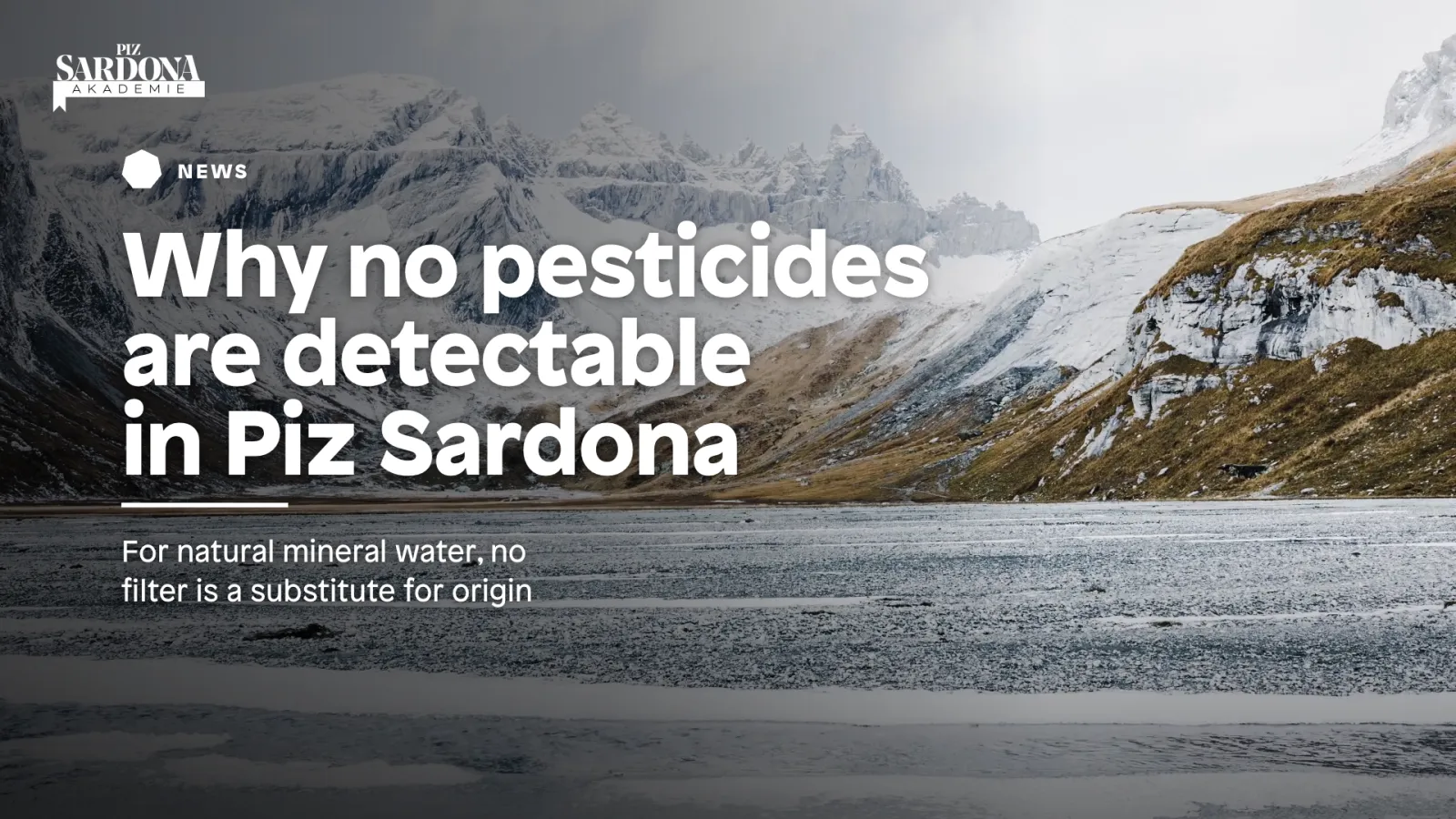
The water of Piz Sardona seeps into the ground at more than 2,000 metres above sea level and filters through the rock for around 12 years until it reaches the Castels spring in Mels.
More on this in the Piz Sardona Academy.
Piz Sardona
Alkaline mineral water with a pH of 8.0 from the Castels spring in Mels — filtered through the rock of the Sardona Alps for twelve years.
Our water