

Tap water may be treated so that it is impeccable when it comes out of the tap. For natural mineral water the opposite applies: it has to come out of the ground as pure as it goes into the bottle. Only a few, narrowly defined processes are permitted. This article explains what food law allows, why activated carbon filters are not among them and why this rule has made headlines in recent years.
In brief
- As a rule, natural mineral water may not be treated. The exceptions are narrow, for example separating out iron or manganese, removing or adding carbon dioxide, or reducing fluoride.
- Disinfection is prohibited, as is removing pesticides and other trace substances of human origin. Activated carbon filters are therefore not among the permitted processes.
- Tap water may be treated. Mineral water must already be pure at the source, which is why its catchment area is decisive.
What makes a natural mineral water
In Switzerland, the Ordinance on Beverages issued by the Federal Department of Home Affairs defines what a natural mineral water is. It must be distinguished by its particular geological origin, by the type and quantity of its minerals, by original purity and by a composition that remains the same within the range of natural fluctuation. The spring must be protected against contamination, and from the spring to bottling the water may only flow through pipes.
At the heart of it is original purity: the water should already be so clean underground that it needs nothing to make it drinkable. This is what sets natural mineral water apart from drinking water from the tap, which may be treated. How mineral water differs from spring water and table water is explained in the article on spring water and mineral water.
Which processes are permitted
The principle is set out in Article 8 of the ordinance: natural mineral water may not be subjected to any treatment or have anything added to it. The exceptions are few and exhaustively listed:
- Decanting and filtering, including after aeration with air or ozone-enriched air, to remove unwanted constituents such as iron or manganese compounds, provided the essential constituents of the water are not altered in the process.
- Removing carbon dioxide completely or partially, by purely physical processes.
- Adding carbon dioxide.
- Removing fluoride with activated alumina or reducing the fluoride content.
- Other treatments only if they are strictly necessary, do not alter the essential constituents of the water and do not serve to improve the hygienic quality of a water that is not impeccable at the source.
Expressly prohibited are disinfection treatments of any kind, the addition of bacteriostatic agents and any other treatment that alters the microbial content. This is why there are limits on fine filters too: in 2025 the Federal Food Safety and Veterinary Office (FSVO) clarified that, for natural mineral water, microfilters may only remove particles such as rock fragments and must not alter the microbial content in doing so. Pore sizes below 0.8 micrometres alter the microbial content considerably and are not permitted (FSVO). Some of the permitted processes must be stated on the label, for example ‘carbon dioxide fully removed’, ‘carbonated’, ‘ozone-treated water’ or ‘fluoride removed’.
What treatment is allowed
Natural mineral water
- Decanting and filtering, for example to separate iron or manganese compounds
- Removing or adding carbon dioxide
- Lowering fluoride with activated alumina
- Not allowed: any disinfection, and any treatment meant to improve the hygienic quality of water that is not sound at the source
Tap water
- Activated carbon
- UV light
- Chlorine, chlorine dioxide or ozone for disinfection
- Membrane processes such as reverse osmosis
Natural mineral water therefore has to be pure at the source. Residues of human origin may not be filtered out afterwards.
Why activated carbon is not one of them
Activated carbon is a highly porous material. Dissolved substances attach themselves to its large internal surface, among them organic trace substances such as residues of plant protection products. In drinking water treatment this is a proven process. It does not appear on the list of permitted treatments for natural mineral water.
The FSVO stated this explicitly in 2022: trace substances of human origin, such as pesticides and their breakdown products, must not occur in natural mineral water at all, and there is no provision for removing them. Food law makes no exceptions for this. Otherwise, the FSVO says, consumers would be misled about the original purity (FSVO). Separating out natural constituents from the rock, such as iron or manganese, remains permitted.
The same logic applies in the EU. The Natural Mineral Waters Directive permits only a few processes and prohibits any form of disinfection. In 2024 an audit by the European Commission in France listed activated carbon and UV light as prohibited treatments (European Commission). Original purity cannot be manufactured. It has to be there from the start.
Why tap water is treated differently
Drinking water from the tap is governed by the Drinking Water Ordinance. It sets maximum levels and allows a whole range of treatment processes: filtration up to and including reverse osmosis, activated carbon, ozone, UV irradiation, chlorine and chlorine dioxide. Blending water from different sources is also expressly provided for, in order to lower the concentration of unwanted substances.
The breakdown products of the fungicide chlorothalonil show what this looks like in practice. Water utilities take contaminated sources out of service, blend their water or obtain it from neighbouring utilities. Where that is not enough, treatment is added, for example with activated carbon or reverse osmosis (Federal Council, Eawag). More on this in the article Pesticides in drinking water.
Water filtered through activated carbon may still be sold, just not as natural mineral water. It then counts as bottled drinking water, and references to spring locations or spring names are not permitted on the container. Since May 2026 a large bottler has been selling such a product in Switzerland, nationwide, according to the company (Le Temps, RTS).
What the cases of recent years show
Two cases show how seriously the rule is taken. In France it emerged in early 2024 that a large group had treated the mineral water of several brands with UV light and activated carbon. In 2025 a commission of inquiry of the French Senate found that these had been disinfection measures, which are strictly prohibited (French Senate).
In French-speaking Switzerland, a large bottler filtered its natural mineral water through activated carbon from 2008 to 2022. The Vaud food inspection authority came across this during an inspection in 2020; in 2021 the FSVO rejected an application for an exemption, citing original purity. The case became public in early 2024 (Vaud Council of State, Le Temps, RTS, Tages-Anzeiger). In 2025 the Vaud Public Prosecutor’s Office ordered the company to pay a compensatory claim of 500,000 francs, on the grounds that the designation ‘natural mineral water’ had misled consumers. According to the Public Prosecutor’s Office, the water posed no danger either before or after filtration, and the company accepted the decision (Canton of Vaud, swissinfo).
Since the filters were dismantled at the end of 2022, production has complied with the law, according to the Vaud Council of State. According to a March 2023 report by the Vaud cantonal chemist, covered by RTS and SRF in 2026, some springs have since been set aside and the water from the remaining ones blended; the media reports name residues of chlorothalonil as the main reason (RTS, SRF, Tages-Anzeiger). The case from French-speaking Switzerland shows what is at stake: if the catchment area of a spring lies in a region of intensive agriculture, plant protection products and their breakdown products can make their way into the groundwater. In natural mineral water they may not be removed afterwards. Why the catchment area matters so much is explained in the article Pesticides in mineral water.
What this means for Piz Sardona
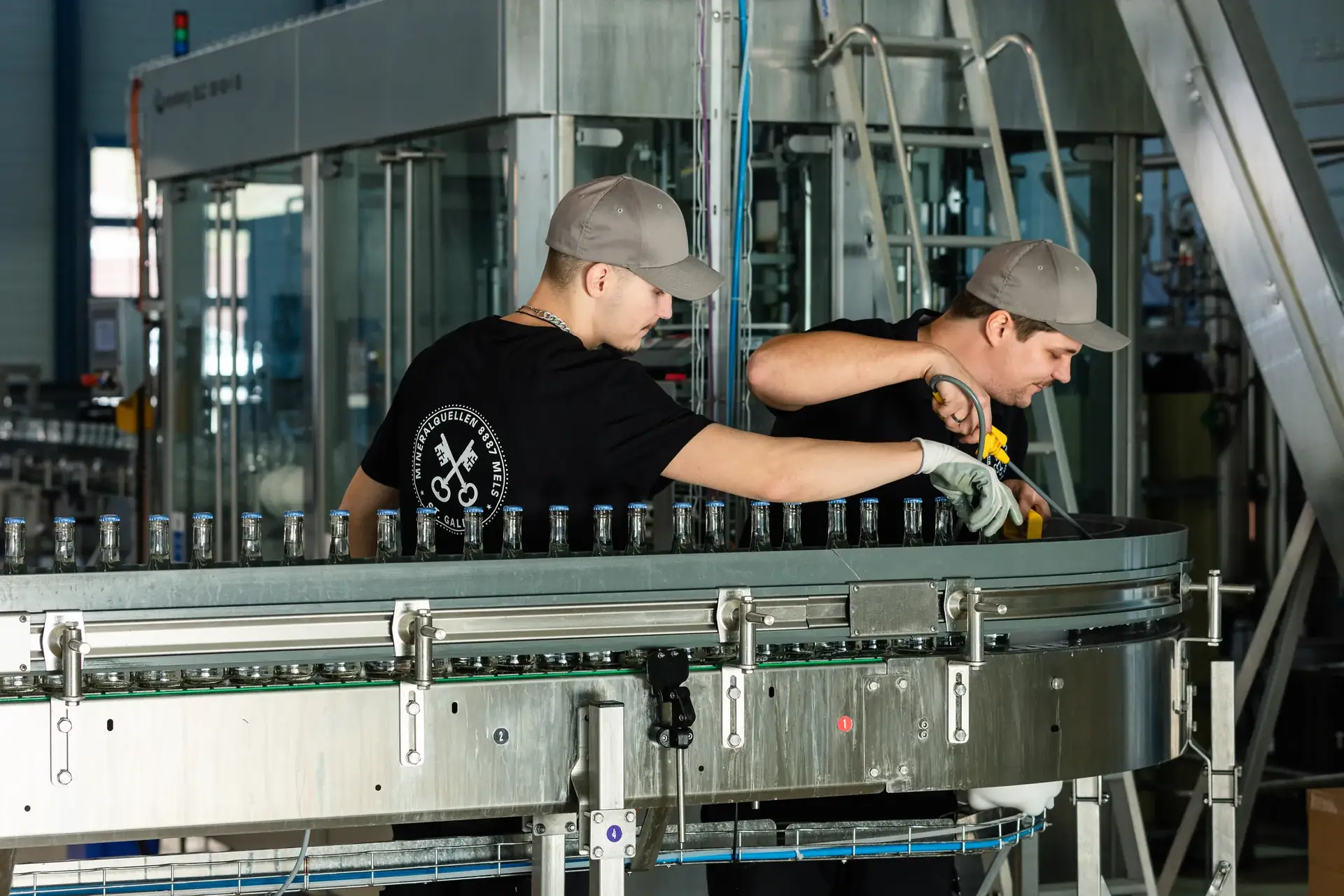
The same applies to Piz Sardona: what is in the bottle must already be that way at the spring. The still variety goes into the bottle without added carbon dioxide. Carbon dioxide is added to the sparkling varieties, one of the few permitted processes.
That makes origin all the more important. The water seeps into the ground at over 2,000 m above sea level in the Sardona Alps, by the UNESCO World Heritage Tectonic Arena Sardona. In the infiltration area there are no arable fields, no vegetable or fruit crops and no vineyards. The water then travels through layers of rock and stone for around twelve years before it is tapped from the Castels spring in Mels. According to Mineralquellen Mels AG, no pesticides can be detected in it, as original purity requires of every natural mineral water. The mineral analysis of the Castels spring can be found on the page our water.
Was this article helpful?
Frequently asked questions
Can mineral water be filtered through activated carbon?
Not if it is natural mineral water. The Swiss Ordinance on Beverages permits only a few, exhaustively listed processes, such as separating out iron or manganese compounds or adding carbon dioxide. Activated carbon is not one of them. The FSVO states that trace substances of human origin, such as pesticides, must not occur in natural mineral water, nor may they be removed. For drinking water from the tap, by contrast, activated carbon is a common process.
Which treatments are permitted for natural mineral water?
The permitted treatments are decanting and filtering, including after aeration with air or ozone-enriched air, to separate out unwanted constituents such as iron or manganese compounds; removing and adding carbon dioxide; and reducing the fluoride content with activated alumina. Other processes are allowed only if they are strictly necessary, do not alter the essential constituents and do not serve to improve the hygienic quality of a water that is not impeccable at the source. Any form of disinfection is prohibited.
Why can tap water be treated but mineral water cannot?
Because the two categories are defined differently. Drinking water has to comply with certain maximum levels, and the Drinking Water Ordinance permits a range of treatment processes for this purpose. Natural mineral water, on the other hand, is defined by its original purity: it must already be impeccable at the source. Anyone buying mineral water should be able to rely on it reaching the bottle exactly as the spring delivers it.
How can a treated mineral water be recognised?
Some treatments must be stated on the label, in the product designation or near the analysis details: for example ‘carbonated’, ‘carbon dioxide partially removed’, ‘ozone-treated water’, ‘manganese removed’ or ‘fluoride removed’. If iron is separated out only by filtering or decanting, this does not have to be declared. Prohibited processes such as disinfection or activated carbon filters may not be used in the first place.
Ask the Academy
Still have a question? Ask us. We will answer it and publish it here below the article. Medical questions about individual cases, however, belong with a doctor.
Poll
How do you like your water best?
Read next
Pesticides in mineral water: why the catchment area is decisive
How do pesticides get into mineral water? What tests have found, why the catchment area of a spring is decisive and what applies to Piz Sardona.
ReadOrganic mineral water: does it exist — and what does ‘organic’ mean for water?
Is there organic mineral water? Why water cannot carry a state organic label, what private seals check and how to recognise a good mineral water.
ReadPesticides in drinking water: what chlorothalonil means for Switzerland
Chlorothalonil and other pesticides in Swiss groundwater: where the values are exceeded, what water utilities are doing and what it means for mineral water.
ReadPiz Sardona
Alkaline mineral water with a pH of 8.0 from the Castels spring in Mels — filtered through the rock of the Sardona Alps for twelve years.
Our water